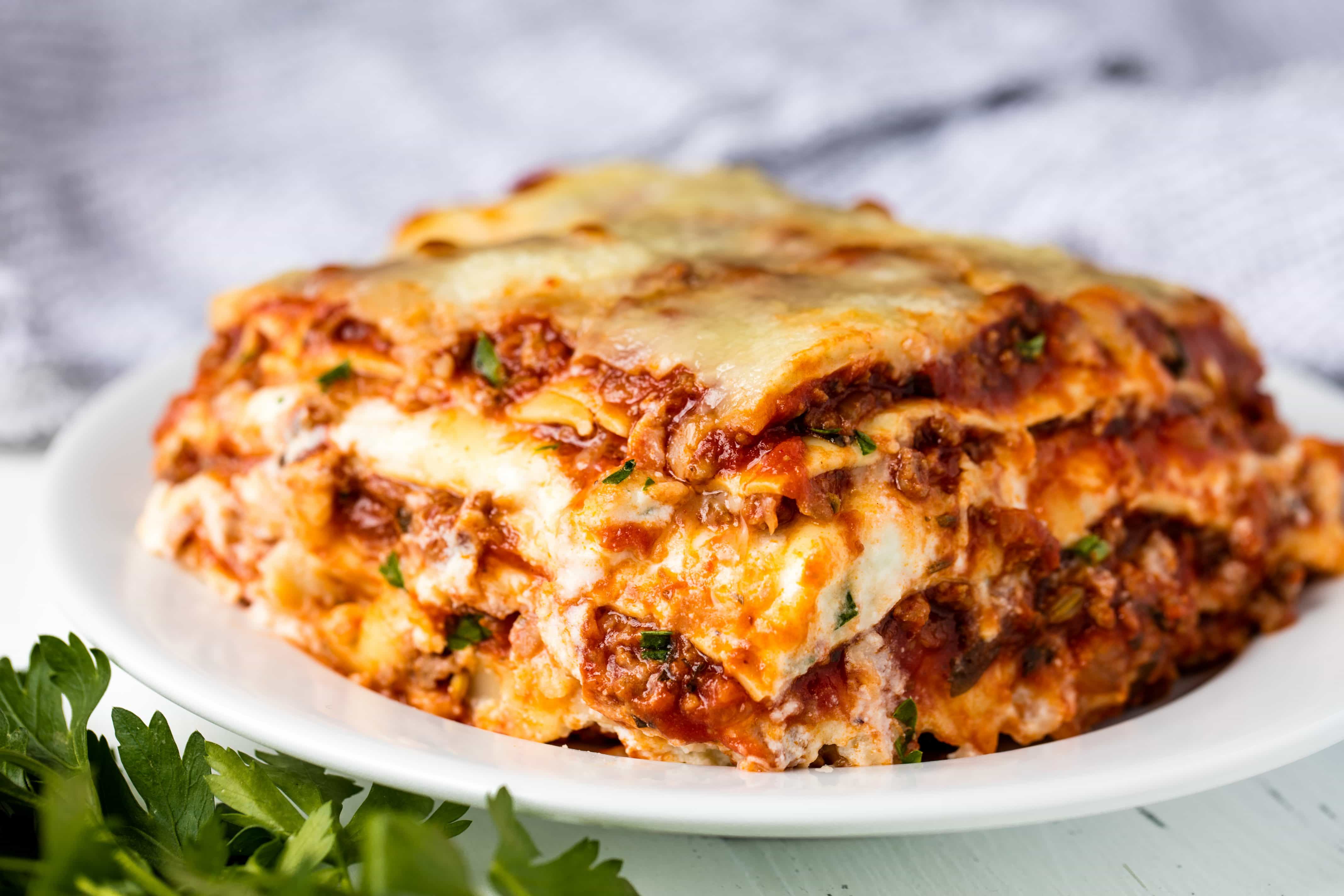
Everyone has a "best" lasagna. Maybe it’s your grandmother’s recipe scribbled on a grease-stained index card, or that one version from a defunct Italian deli in South Philly. But if you spend any time scrolling through cooking forums or looking for a weekend project, you’ve hit it. The New York Times lasagna recipe—specifically the legendary version by Melissa Clark—is basically the final boss of pasta bakes. It’s not just food. It is a commitment. It’s an afternoon of simmering, a sink full of red-stained dishes, and a smell that lingers in your curtains for three days.
Honestly, it’s a bit intimidating at first glance. We’re talking about a multi-step process that demands respect. You can’t just wing this on a Tuesday night after work when you're exhausted. You'll fail. Or you'll just be grumpy. This recipe is for when you want to prove something to your taste buds. It’s for the holidays or that one friend’s birthday where you actually like them enough to spend forty dollars on cheese.
What makes the New York Times lasagna recipe actually different?
Most people grew up on the "box" version. You know the one: boil the curly-edged noodles, mix a tub of ricotta with an egg, brown some ground beef, and layer it with jarred marinara. It’s fine. It’s nostalgic. But the NYT version—and specifically the Lasagna Bolognese variations they’ve championed—shreds that playbook.
The biggest differentiator is the sauce. We aren't just talking about a quick meat sauce here. We’re talking about a slow-cooked ragù that often incorporates a mix of beef, pork, and sometimes veal. It’s about the "soffritto"—that holy trinity of onion, carrot, and celery—finely minced and sautéed until it basically disappears into the meat. There’s a depth there that a 20-minute simmer just can’t touch.
Then there is the white sauce. Many of the most popular NYT lasagna iterations swap out the grainy, heavy ricotta for a silky béchamel. If you haven't had lasagna with béchamel, you’re missing out on a creamy, velvety texture that makes ricotta feel like wet sand by comparison. It’s a French technique applied to an Italian classic, and it’s why the dish feels so expensive when you eat it.
The noodle debate is real
People get weird about noodles. Some purists insist you must make fresh egg pasta from scratch, rolling it out until you can see the grain of the wood through the sheet. The NYT cooks often suggest that too, but they’re also surprisingly pragmatic. Melissa Clark has famously defended the use of no-boil noodles in certain contexts, provided you have enough liquid in your sauce to hydrate them.
It’s a controversial stance.
Traditionalists think no-boil noodles are a crime against humanity. But here’s the thing: when they sit in that rich sauce and soak up the fats and juices, they take on a structural integrity that boiled noodles sometimes lack. They don't get as mushy. They hold the layers. If you're going the homemade route, though, you're looking at a different level of silkiness. It’s the difference between a sturdy work boot and a silk slipper. Both have their place.
The secret is in the layering (and the patience)
If you rush the assembly, the whole thing turns into a structural nightmare. You’ve seen it happen. You cut a slice, and it just slumps onto the plate like a sad, cheesy puddle. The New York Times lasagna recipe emphasizes a specific ratio. You want thin layers. Lots of them.
Instead of three massive layers of thick noodles and giant globs of cheese, the best versions encourage five, six, or even seven thin layers. This ensures that every single bite has the exact same ratio of pasta to meat to cream. It’s math, basically. Delicious, cheesy math.
- Start with a thin smear of sauce on the bottom so the pasta doesn't stick.
- Lay your noodles with just a tiny bit of overlap.
- Don't over-sauce. It's tempting, but "soup lasagna" is a common failure.
- Finish with a heavy hand of Parmigiano-Reggiano. Not the stuff in the green can. Please.
One thing people often overlook is the rest period. This is arguably the most important "ingredient" in the whole process. When that pan comes out of the oven, bubbling and hissing, your instinct is to dive in. Don't. If you cut it immediately, the liquids will run everywhere. You have to let it sit for at least 20 to 30 minutes. It needs to "set." The layers bond. The cheese firms up just enough to hold its shape. Trust the process.
Variations that actually work
The NYT Cooking archives are deep. You have the classic meat-heavy versions, but their vegetable lasagnas are surprisingly robust. There’s a mushroom lasagna recipe by Sam Sifton that uses a massive amount of roasted fungi to create a "meatiness" that fools even the most dedicated carnivores.
Then there’s the "Skillet Lasagna" for people who have lives and jobs and can't spend six hours in the kitchen. It uses the same flavor profiles but breaks the noodles into pieces and cooks them right in the sauce. Is it a "real" lasagna? Probably not to a nonna in Bologna. Does it taste 90% as good for 20% of the effort? Absolutely.
Common pitfalls to avoid
Even with a world-class recipe, things can go sideways.
First, watch your salt. If you’re using high-quality Parmesan and Pecorino, those are already salt bombs. If you salt every layer of your sauce and your béchamel like a madman, the final product will be inedible. Season as you go, but taste constantly.
Second, the moisture content of your vegetables matters. If you’re making a spinach or zucchini version, you have to squeeze the water out. Like, really squeeze it. Use a kitchen towel and twist until your forearms ache. If you don't, that water will release in the oven and turn your lasagna into a swamp.
Why this recipe dominates the SEO rankings
It’s not just about the taste; it’s about the brand. When people search for the New York Times lasagna recipe, they are looking for a gold standard. They want a recipe that has been tested in a professional kitchen dozens of times. They want to know that if they spend $50 on ingredients and 4 hours of their life, the result will be worth it.
The NYT has mastered the "instructional" tone. They tell you why you’re browning the meat in batches (to get a sear, not a steam). They tell you why you should use whole milk instead of skim. This level of detail builds E-E-A-T (Experience, Expertise, Authoritativeness, and Trustworthiness) which is exactly what Google's algorithms are looking for in 2026.
Actionable steps for your next bake
If you're ready to tackle this, don't just print the recipe and start. Preparation is the difference between a fun afternoon and a kitchen meltdown.
- Mise en place is non-negotiable. Chop every onion, carrot, and celery stalk before you even turn on the stove. Grate your cheese by hand; pre-shredded cheese is coated in potato starch to prevent clumping, which ruins the melt.
- Make the sauce a day early. Seriously. Like a good chili or stew, the flavors in a Bolognese develop and marry overnight in the fridge. It also makes the assembly day much less stressful.
- Invest in a heavy-duty roasting pan. Glass 9x13 dishes are fine, but a heavy ceramic or enameled cast iron pan distributes heat more evenly and gives you those crispy, charred corner bits that everyone fights over.
- Temper your expectations on time. If the recipe says it takes three hours, give yourself five. Between the prep, the simmering, the assembly, and the cooling, it’s a marathon, not a sprint.
- Use the "foil tent" method. Cover the lasagna for the first half of the bake to ensure the noodles cook through and the cheese doesn't burn. Remove it for the last 20 minutes to get that golden-brown crust.
Once you’ve mastered the base technique, start experimenting. Add a pinch of nutmeg to your béchamel. Throw a Parmesan rind into your ragù while it simmers. The New York Times lasagna recipe is a template for excellence, but your kitchen is the final authority.