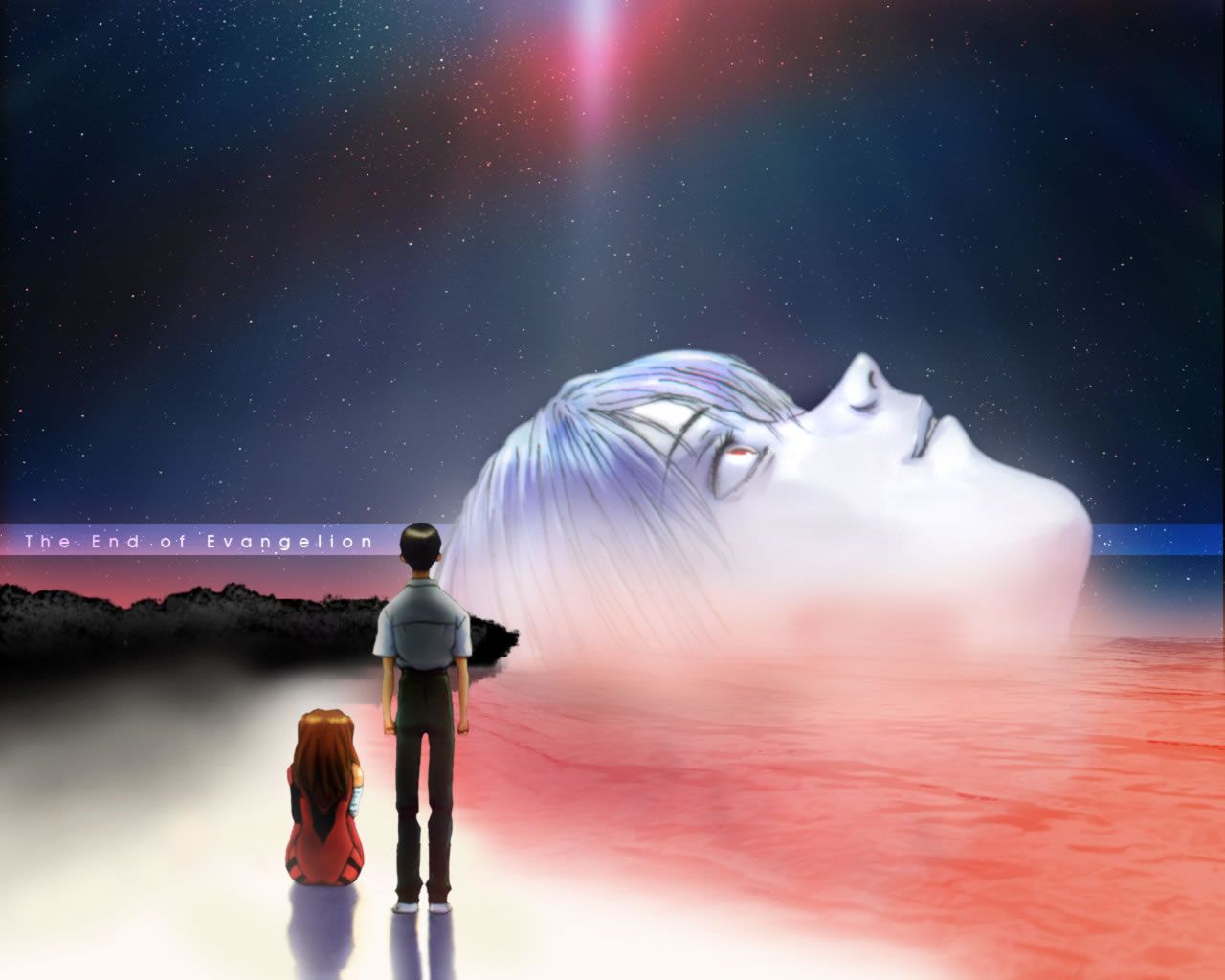
It starts with a scream. Honestly, if you grew up watching Neon Genesis Evangelion, that sound—the literal shattering of the world—probably lives rent-free in the back of your mind. We need to talk about the Third Impact in Evangelion because, let’s be real, most of us finished The End of Evangelion and just stared at the static on the TV for twenty minutes trying to figure out if we were still human. It wasn't just a big explosion. It wasn't just a "bad guy loses" moment. It was a psychedelic, psychological, and biological reset of the entire species that somehow felt both like a tragedy and a weirdly beautiful new beginning.
Most anime endings give you a neat little bow. Shinji Ikari didn't give us that. Instead, he gave us a giant, white, glowing version of Rei Ayanami and a sea of orange Tang. It’s messy. It’s loud. It’s iconic.
What Actually Happens During the Third Impact in Evangelion?
Basically, the Third Impact in Evangelion is the culmination of the Human Instrumentality Project. See, the whole point of NERV, Seele, and Gendo Ikari’s various schemes was to force humanity to evolve. Or devolve. It depends on who you ask. In the show’s lore, humans are "Lilim"—beings born from the 2nd Seed of Life. We have individual bodies, but those bodies are basically prisons. We have "AT Fields," which are the physical and mental barriers that keep us separate from each other.
That’s why humans feel lonely. That’s why we hurt each other. Because we can't truly understand what someone else is thinking.
When the Third Impact in Evangelion triggers, those AT Fields collapse. Everyone’s physical form literally dissolves into LCL, that orange liquid we see throughout the series. Imagine your body just... turning into soup. But your soul stays intact. All the souls of humanity merge into one single, collective consciousness. No more pain. No more secrets. Just a giant hive-mind of bliss where nobody is ever lonely again.
The Catalyst: Why Rei and Kaworu?
It wasn't supposed to happen the way it did. Seele wanted to control the process using the Mass Produced Evangelions and the Spear of Longinus. Gendo Ikari wanted to use Rei to reunite with his dead wife, Yui. But Rei, in one of the most pivotal moments in anime history, chooses Shinji. She absorbs the embryo of Adam that Gendo had grafted into his hand and merges with Lilith, the giant white being beneath Terminal Dogma.
The result is a god-like entity. It looks like Rei, but it also takes the form of Kaworu Nagisa because that’s who Shinji feels safe with. It is a terrifying sight. You have these massive wings, these white "Moons," and then the "Anti-AT Field" spreads across the globe. People see the person they love most right before they "pop" into LCL. It’s intimate and horrific at the same time.
The Philosophical Weight of Choosing Individual Pain
Here is where it gets heavy. Shinji Ikari is at the center of this cosmic blender. He’s the one who gets to decide: do we stay as a collective soul-soup, or do we go back to being individuals?
A lot of people think the Third Impact in Evangelion is just a "bad" ending. I’d argue it’s more complex than that. Shinji initially wants everyone to die. He’s been hurt so much by his father, by Asuka, by the weight of the world, that he thinks a world without individual "others" is better. If nobody exists, nobody can hurt him.
But then he realizes something. If nobody can hurt him, nobody can love him either.
The realization that "the pain of existing is better than the nothingness of unity" is the core of the Third Impact in Evangelion. Shinji eventually rejects Instrumentality. He decides that even though being an individual means being lonely and misunderstood, it’s the only way to find happiness. He literally chooses to bring back the world, even if that world is a red, ruined wasteland where he’s stuck on a beach with Asuka.
Misconceptions About the Red Sea and the LCL
- The "Tang" is just blood. No, LCL is the "primordial soup." It’s the stuff life came from. Turning into LCL isn't technically dying; it's returning to the source.
- Everyone is dead forever. Not true. Yui Ikari (inside Unit-01) explains that anyone who can imagine themselves in their own heart can return to human form. The door is open.
- The TV Ending and the Movie Ending are different. This is a huge debate. Some fans think the happy, "congratulations" scene in episode 26 is just the internal, mental version of what happens during the movie's Third Impact in Evangelion. Others think they are two separate timelines. Personally? They feel like two sides of the same coin. One is the internal victory, the other is the external cost.
Why This Ending Still Triggers Us
Hideaki Anno, the creator, was going through some dark stuff when he made this. You can feel it. The imagery of the Third Impact in Evangelion—the crosses of light, the giant Rei-Lilith bleeding from her neck, the distorted music—it’s designed to be uncomfortable. It’s an "Anti-Escapist" ending.
Most stories let the hero save the world and live happily ever after. Evangelion tells you that saving the world means you have to keep living in it, and living is hard work. It’s a subversion of the entire Mecha genre. You don't get a medal. You get a beach, a broken world, and a girl who looks at you and says, "How disgusting."
There’s a reason why people are still writing essays about this in 2026. It taps into a universal human fear: the fear that we are fundamentally alone. And then it gives us the scariest solution imaginable: that we don't have to be alone if we're willing to stop being "us."
Actionable Insights for the Evangelion Fan
If you've just finished the series and your head is spinning, or if you're revisiting the Third Impact in Evangelion after years away, here are a few things to do to actually process what you just watched.
Watch the Rebuilds (1.11 through 3.0+1.01)
If the original ending left you feeling too hollow, the Rebuild of Evangelion films offer a different perspective. They deal with the same themes but from the viewpoint of a creator who has had 20 more years to process his own depression. The "Final Impact" in the last movie is a direct dialogue with the original ending.
Read the Manga by Yoshiyuki Sadamoto
The manga actually has a slightly different take on the characters and the ending. It’s often considered more "straightforward" than the anime. If you want a version where Shinji is a bit more proactive and the lore is explained with a bit more clarity, the manga is your best friend.
Research the Dead Sea Scrolls Influence
A lot of the terminology in the Third Impact in Evangelion isn't just cool-sounding gibberish. Anno pulled from Gnosticism, Kabbalah, and various apocryphal Christian texts. Looking up the "Chamber of Guf" or the "Tree of Sephiroth" will give you a much deeper appreciation for the visual metaphors used during the impact.
Listen to the Soundtrack: "Komm, süsser Tod"
The song that plays during the Third Impact in Evangelion translates to "Come, Sweet Death." Read the lyrics. It’s a upbeat, Beatles-esque pop song about suicide and the end of the world. It perfectly captures the cognitive dissonance of the scene—the joy of finally letting go of the self, mixed with the horror of total annihilation.
The Third Impact in Evangelion isn't just a plot point. It's a mirror. What you see in that giant, bleeding Rei says more about you than it does about the show. Are you afraid of being alone, or are you afraid of being seen? Shinji chose to be seen. It's a messy choice, but it's the only one that makes us human.