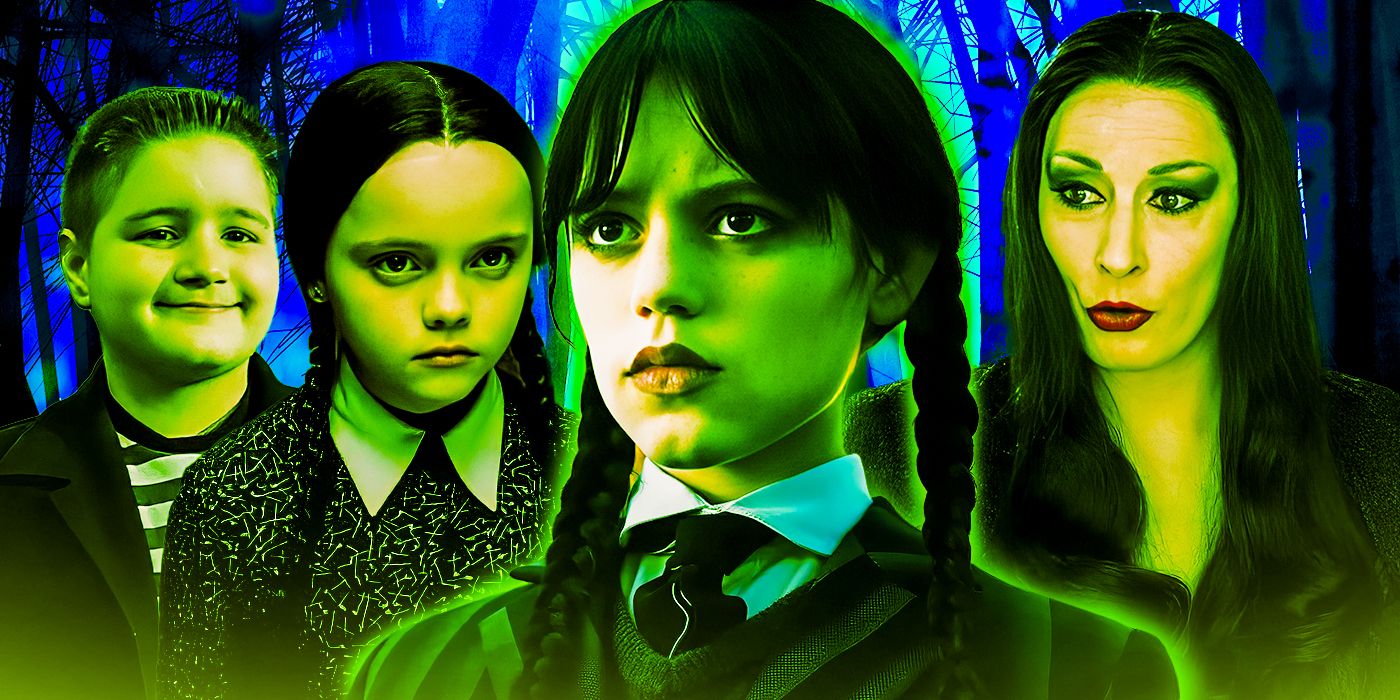
Wednesday Addams isn't just a character anymore. She’s a mood. She’s a whole aesthetic that somehow survives every single decade without losing her edge. Whether you first met her in the 1960s sitcom, the 1991 Wednesday Addams Family movie, or the massive Netflix explosion led by Jenna Ortega, there’s something about that deadpan stare that just works. It’s weird, honestly. We’re talking about a girl who tries to electrocute her brother for fun, yet millions of people see themselves in her.
The thing is, the "Addams Family" isn't just one thing. It's a sprawling multiverse of kookiness. But the 1991 film, directed by Barry Sonnenfeld, is usually what people mean when they talk about the definitive big-screen version. It’s the movie that took Charles Addams’ New Yorker cartoons and turned them into a high-budget, gothic fever dream. It changed how we see Wednesday forever. Before Christina Ricci took the role, Wednesday was... well, she was a bit sweeter. Ricci turned her into a lethal weapon of dry wit and homicidal intent. And we loved it.
The 1991 Wednesday Addams Family Movie: Where the Icon Was Born
You have to remember what movies looked like in the early 90s. Everything was bright, loud, and trying way too hard to be "radical." Then along comes this movie about a family that lives in a literal graveyard and thinks torture is a romantic pastime. It shouldn't have worked. The production was a nightmare, too. The original cinematographer quit, the director was constantly stressed, and the studio (Orion) actually sold the rights to Paramount midway through filming because they were convinced it would flop.
They were wrong.
The 1991 film grossed over $190 million. Why? Because of the chemistry. Anjelica Huston and Raul Julia as Morticia and Gomez were peak relationship goals, but it was the kids who stole the show. Specifically, Wednesday. In the original comics and the 60s show, she was a quirky six-year-old. The 90s movie aged her up just enough to give her a biting sense of irony.
Think about the scene where she's selling lemonade. A perky Girl Scout asks if the lemonade is made from real lemons. Wednesday looks her dead in the eye and asks if the Girl Scout cookies are made from real Girl Scouts. That’s the moment. That’s the exact second Wednesday Addams became a legend for every person who ever felt out of place in a world obsessed with toxic positivity.
The Ricci Factor vs. The Ortega Era
We have to talk about the evolution. Jenna Ortega’s "Wednesday" series on Netflix is a massive hit, and rightfully so. It brought the character to a Gen Z audience that needed its own version of a social outcast. But the 1991 Wednesday Addams Family movie did something different. It didn't try to make her a detective or put her in a "Harry Potter" style school. She was just a kid in a weird family, reacting to the "normal" world.
There's a specific kind of darkness in the 90s films—especially the sequel, Addams Family Values—that feels more dangerous than the modern streaming version. When Wednesday burns down Camp Chippewa in the sequel, it isn't just a prank. It’s a full-on socio-political statement against the erasure of Indigenous history, wrapped in a comedy. It was brilliant. It was also deeply cynical in a way that modern TV sometimes shies away from to keep things "bingeable."
Why We Still Care About a 35-Year-Old Movie
It's the craftsmanship. It's the practical effects. It's the fact that Thing was played by an actual magician’s hand (Christopher Hart) rather than just being a CGI blob.
- The set design of the Addams mansion felt lived-in. It was dusty, cramped, and smelled like decay (probably).
- The costume design by Ruth Myers was legendary. Morticia’s dresses were so tight Anjelica Huston literally couldn't sit down between takes.
- The script didn't talk down to the audience. It used words like "languid" and "charnel house."
People keep coming back to this version because it feels authentic. Even though it's a movie about a family that survives lightning strikes and sword fights, the emotional core is real. They love each other. They support each other's weirdness. In a world where families are often depicted as dysfunctional or toxic in movies, the Addams family is actually the most functional unit on screen. They just happen to like knives.
The Misunderstood "Evil" of Wednesday Addams
A lot of people get Wednesday wrong. They think she's a villain or a "mean girl." She’s really not. If you look closely at the Wednesday Addams Family movie, she only ever targets people who are bullies, hypocrites, or boring. She has a strict moral code. It’s just... a different code than yours.
She protects Pugsley (even if she’s the one torturing him). She sees through the fake smiles of the socialites who try to steal the family fortune. There is a purity to her cynicism. In the 1991 film, when Uncle Fester (or the guy pretending to be him) is being manipulated by Abigail Craven, Wednesday is the only one who stays suspicious. She trusts her gut. She’s the smartest person in the room, and she doesn't need you to like her. That’s the ultimate power fantasy, isn't it? Not caring what anyone thinks.
Navigating the Different Versions
If you’re trying to dive back into this world, it can get confusing. You have the 1964 TV show, which is campy and sweet. You have the two 90s live-action movies. Then there are the animated films from 2019 and 2021, which are... fine, but they’re definitely for younger kids. And finally, the Netflix series.
If you want the "real" Wednesday experience, start with the 1991 film. Then go immediately to Addams Family Values. Honestly, the sequel might be better than the first one. Joan Cusack as the villainous Debbie Jellinsky is one of the greatest comedic performances in cinema history.
What to Watch for in the 1991 Original:
- The "Mamushka" dance sequence (Raul Julia did most of his own stunts here).
- The subtle references to the original New Yorker cartoons hidden in the background art.
- The way the camera moves—Barry Sonnenfeld was a cinematographer first, so every shot is framed like a painting.
Actionable Steps for the Ultimate Addams Experience
Stop treating it as just a Halloween movie. It's a year-round vibe. If you want to actually appreciate the depth of the Wednesday Addams Family movie and its impact on pop culture, here is how you do it:
- Watch the 1991 film with the subtitles on. You’ll catch about 30% more of the dry, fast-paced jokes that fly under the radar. The wordplay is incredibly dense.
- Track down the original Charles Addams cartoons. You can find collections like The Addams Family: An Evilution. Seeing the source material makes you realize how much the movies got right—and how much they invented.
- Compare the "Camp Chippewa" monologue to modern social commentary. It’s wild how ahead of its time that script was. It tackles the "Blandification" of America in a way that feels more relevant in 2026 than it did in 1993.
- Don't skip the 60s show entirely. Watch the episode "Wednesday Leaves Home." It’s a great look at how the character started before she became the "Goth Icon" we know today.
The Addams Family works because they are the ultimate outsiders. They don't want to fit in, and they aren't asking for permission to exist. In the 1991 Wednesday Addams Family movie, Wednesday represents that core truth better than anyone else. She is the anchor of the family’s darkness. Without her, it’s just a comedy. With her, it’s a manifesto on how to be yourself, no matter how many people think you’re a monster.
Go back and re-watch the scene where Gomez and Morticia are reminiscing about their first meeting at a funeral. Then watch Wednesday’s reaction. She isn't disgusted; she's taking notes. That’s the legacy of the character. She isn't just a girl in a black dress; she's the personification of the idea that being "normal" is the scariest thing of all.