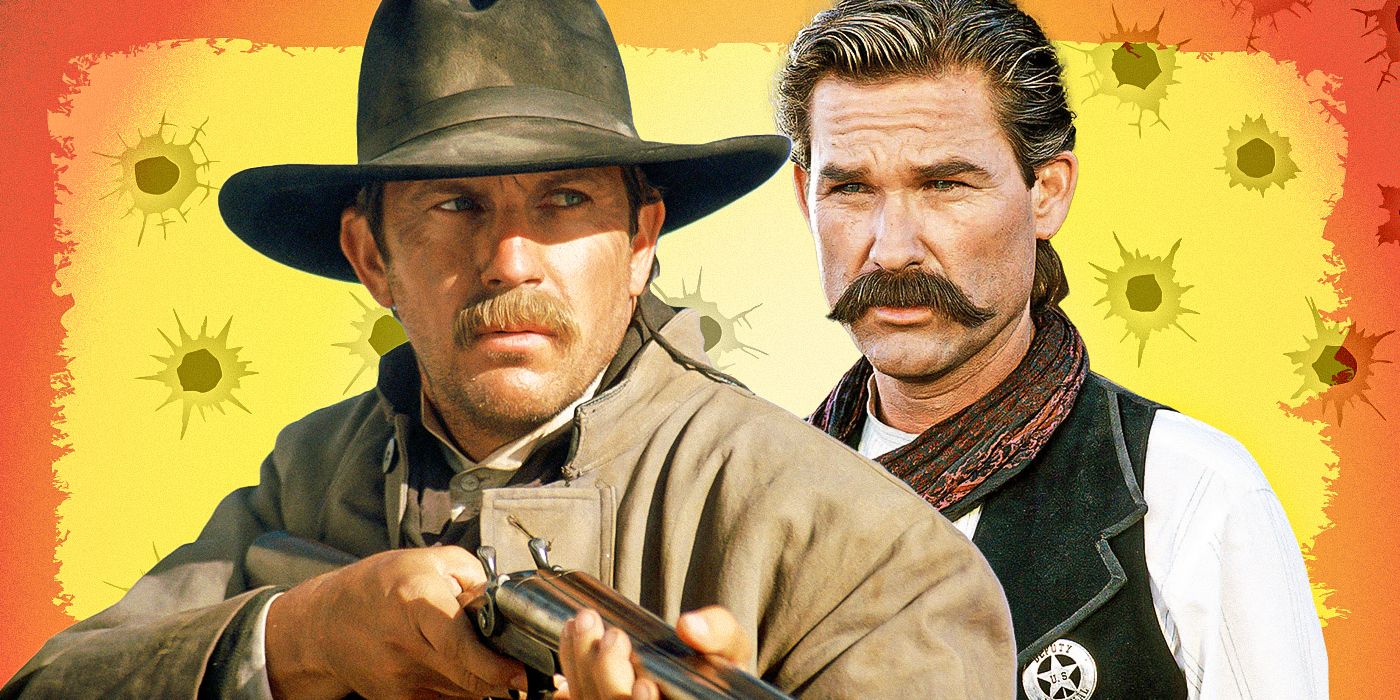
Tombstone is basically the coolest mistake Hollywood ever made. You’ve seen it, right? Even if you haven't watched it start-to-finish in a decade, you probably know the lines. "I’m your huckleberry." "Hell’s coming with me." It’s the kind of movie that feels like it’s always been there, a permanent fixture of masculine cinema and Western lore. But the wyatt earp movie with kurt russell almost didn't happen. Honestly, it should have been a disaster.
The production was a total mess. Imagine being a month into filming a $25 million Western and the studio just fires the director. That’s exactly what happened to Kevin Jarre. He wrote this incredible, sprawling script—arguably the best Western screenplay ever written—but he couldn't keep the train on the tracks. He was falling behind. He was obsessed with historical detail to the point of exhaustion. So, Disney’s Hollywood Pictures pulled the plug on him.
The "Ghost Director" and the Kurt Russell Factor
This is where the legend of the wyatt earp movie with kurt russell gets really interesting. Most people see George P. Cosmatos listed as the director in the credits. He’s the guy who did Rambo: First Blood Part II. But if you ask the cast, they’ll tell you a different story.
Kurt Russell basically stepped up and saved the damn movie.
He didn't want the credit. He didn't want the "Director" title because he didn't want to be the guy who got a fellow director fired. Instead, he made a deal. They brought in Cosmatos to be a "ghost director." Every night, Kurt would go to George’s room and give him a shot list for the next day. "George, don't argue with me. This is what we're shooting." That was the vibe.
Val Kilmer, who played Doc Holliday in what is arguably the greatest supporting performance in film history, later confirmed this. He said Kurt sacrificed his own role and his own energy to make sure the story worked. He was trimming the script, cutting his own lines, and focusing on the relationship between Wyatt and Doc. Without Kurt Russell’s obsession with the project, Tombstone would have died in the Arizona dirt in 1993.
Why It Beat the "Other" Wyatt Earp Movie
At the same time, Kevin Costner was making his own Earp movie. It was literally titled Wyatt Earp. Costner was at the height of his power back then, and he tried to use his influence to shut down Tombstone. He reportedly told studios not to distribute it. He wanted his version to be the definitive one.
He failed.
Costner’s movie came out six months later and it was... well, it was three hours long and kinda boring. It tried to cover Wyatt's entire life from boyhood to old age. It felt like a history lecture. Tombstone, on the other hand, was lean. It was mean. It focused on the "Vendetta Ride" and the O.K. Corral. It had style. While the Costner version was "pumping it full of hot air," as Roger Ebert put it, the Kurt Russell version was setting things on fire.
The "I'm Your Huckleberry" Mystery
Let’s talk about Val Kilmer for a second. You can’t discuss the wyatt earp movie with kurt russell without talking about Doc Holliday. Kilmer was transcendent. He was actually sick during most of the shoot—not with TB, thankfully, but he was literally laying on a bed of ice between takes to keep from sweating through his period-accurate wool suits.
That line, "I'm your huckleberry," has been debated for years. Some people think it's a reference to a handle on a casket. Others think it means "I'm the right man for the job." In the context of the film, it’s just pure, distilled cool.
What the Movie Got Right (and Wrong)
Historians love to pick this movie apart, but it's actually more accurate than most people think.
- The Mustaches: Every mustache in the movie was real, except for Jon Tenney’s (he played Sheriff Behan). The actors grew them out for months to match the period photos.
- The Gunfight: The O.K. Corral scene is choreographed almost exactly as the real-life testimonies described it. It lasted about 30 seconds. In the movie, it feels longer because of the tension, but the geography and the sequence of shots fired are surprisingly close to the truth.
- The Costumes: Kevin Jarre, despite being fired, left his mark on the look. He insisted on heavy wool, even in the Arizona heat. He wanted the actors to look as miserable and dusty as the real men were.
But yeah, it takes liberties. The real Virgil and Morgan were ambushed weeks apart, not on the same night. And Johnny Ringo? He was found dead under a tree in reality—possibly a suicide—whereas the movie gives us that epic showdown where Doc Holliday steps out from behind the tree. "Why Johnny Ringo, you look like somebody just walked over your grave."
It’s better than history. It’s mythology.
How to Experience Tombstone Today
If you haven't seen the wyatt earp movie with kurt russell lately, you're missing out on a masterclass in ensemble acting. You've got Sam Elliott, Bill Paxton, Michael Biehn, Powers Boothe, and even a narrator cameo by Robert Mitchum.
Next Steps for the Ultimate Fan:
- Watch the Director's Cut: If you can find it, the expanded version adds about six minutes of footage that fleshes out the romance between Wyatt and Josephine Marcus.
- Visit Old Tucson: Much of the movie was filmed at the Old Tucson Studios in Arizona. You can still walk some of those streets today.
- Read the Original Script: Kevin Jarre’s original, un-trimmed script is available online. It’s a beast of a read, but it shows you the "epic" version of the movie that never quite made it to the screen.
At the end of the day, Tombstone survived because of the grit of its cast. It shouldn't have worked. It was a "troubled production" by every definition of the word. But like Wyatt Earp himself, it just refused to die.
Now, go put on the DVD or find it on streaming. It’s time for a rewatch. Justice is coming.